
Case Study
Distinctive Sunglass Frames Created with 3D
Printing
Consumer
Kaneko Optical Co., Ltd.
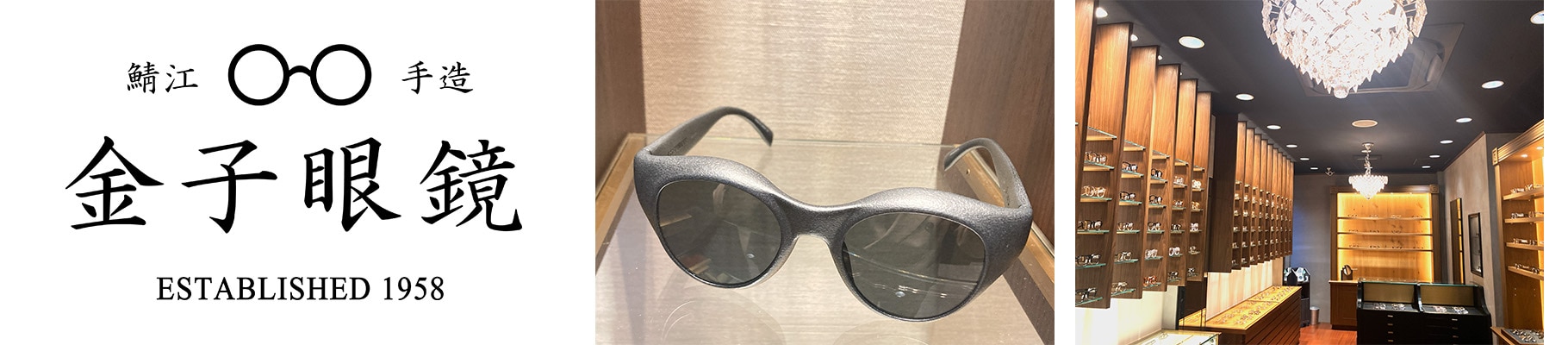
At the request of Kaneko Optical, SOLIZE PARTNERS produced distinctive sunglass frames. By combining Kaneko Optical’s commitment to meticulous craftsmanship rooted in both tradition and innovation with SOLIZE PARTNERS’ cutting-edge 3D printing technology, SOLIZE PARTNERS contributed to bringing the distinctive design to life.
About Kaneko Optical Co., Ltd.
Kaneko Optical Co., Ltd. has consistently pursued innovation. At the heart of this commitment are the exceptional skills of craftspeople cultivated in Sabae and an uncompromising dedication to craftsmanship. Building on this heritage, the company operates three in-house factories, including “BACKSTAGE,” which was established to further advance its pursuit of eyewear manufacturing.
Rather than relying on the conventional division-of-labor model, these factories integrate all production processes in-house. Kaneko Optical continually works to elevate every aspect of its eyewear, from design and functionality to fashion, while embracing advanced technologies and pursuing new approaches.
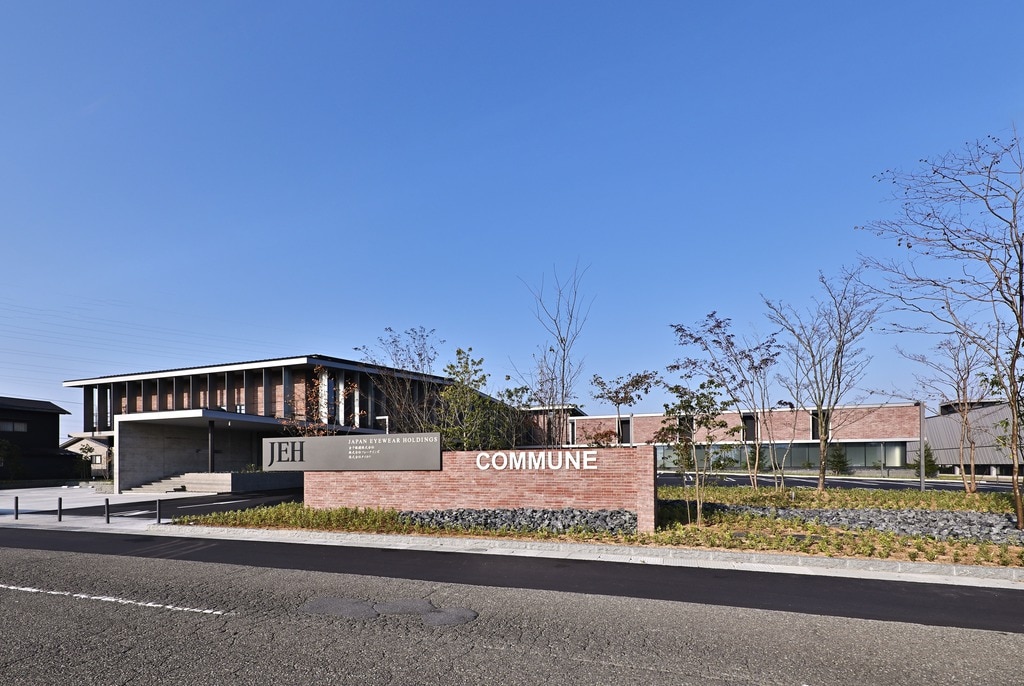
Exterior of Kaneko Optical headquarters
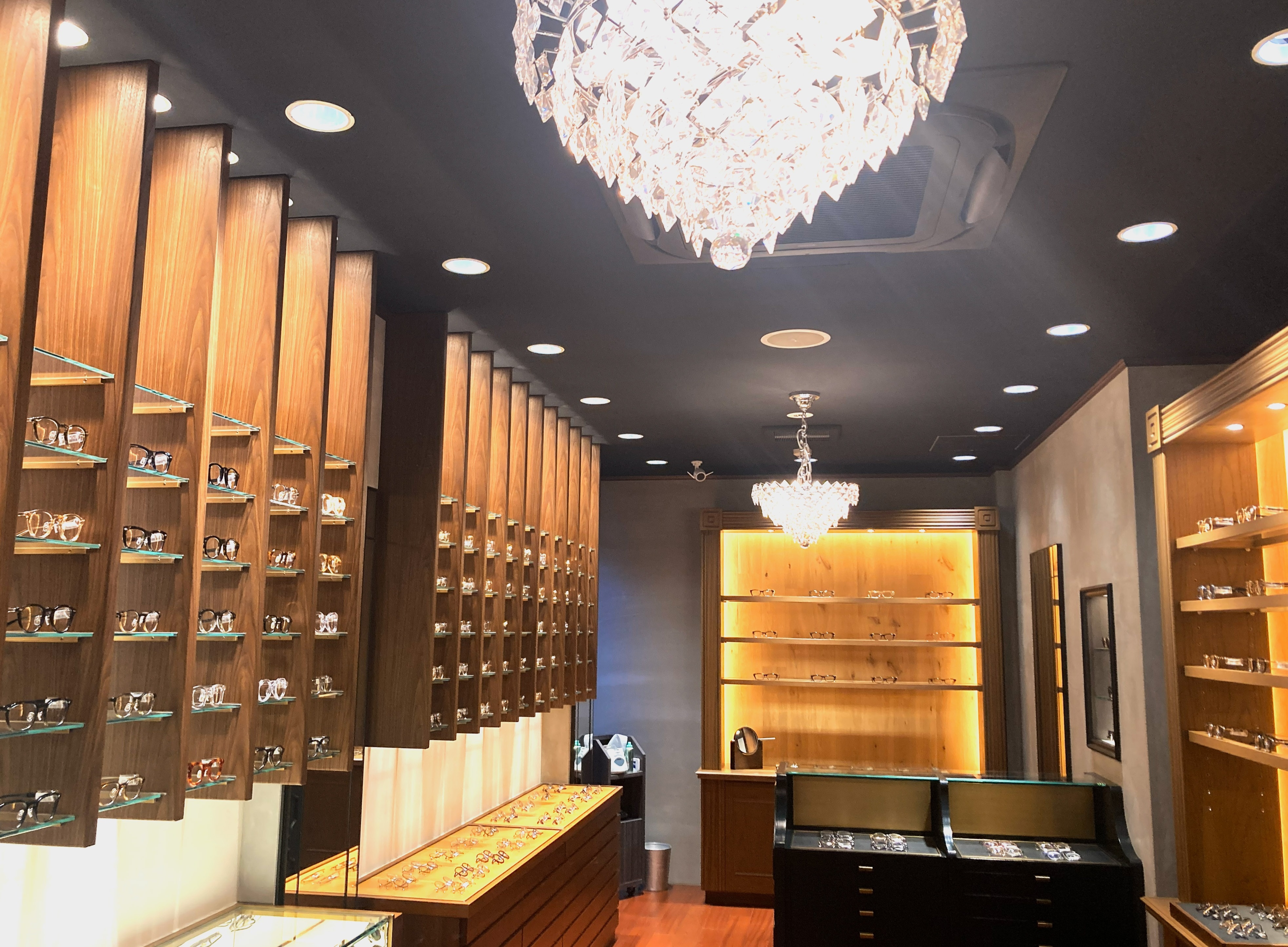
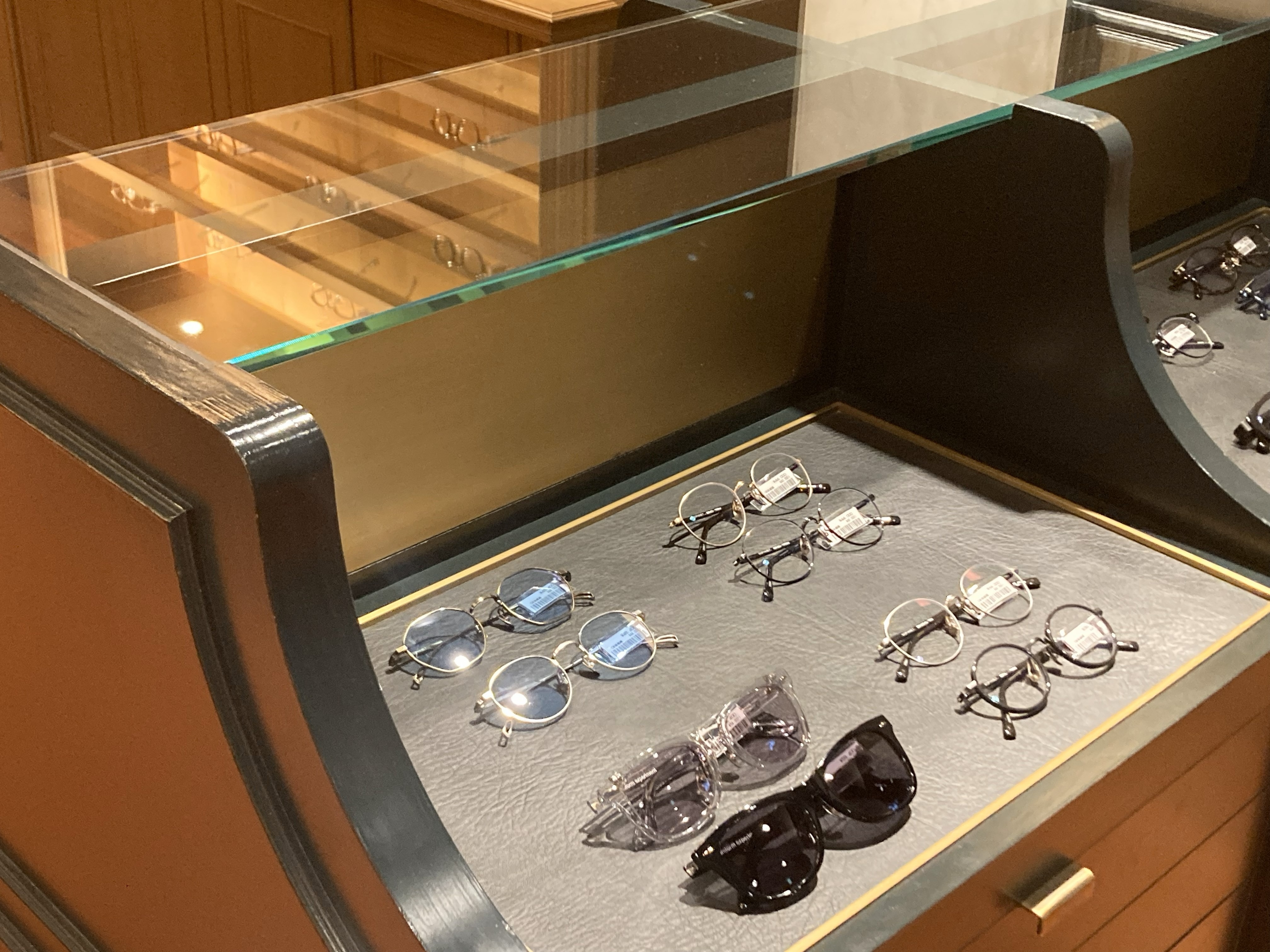
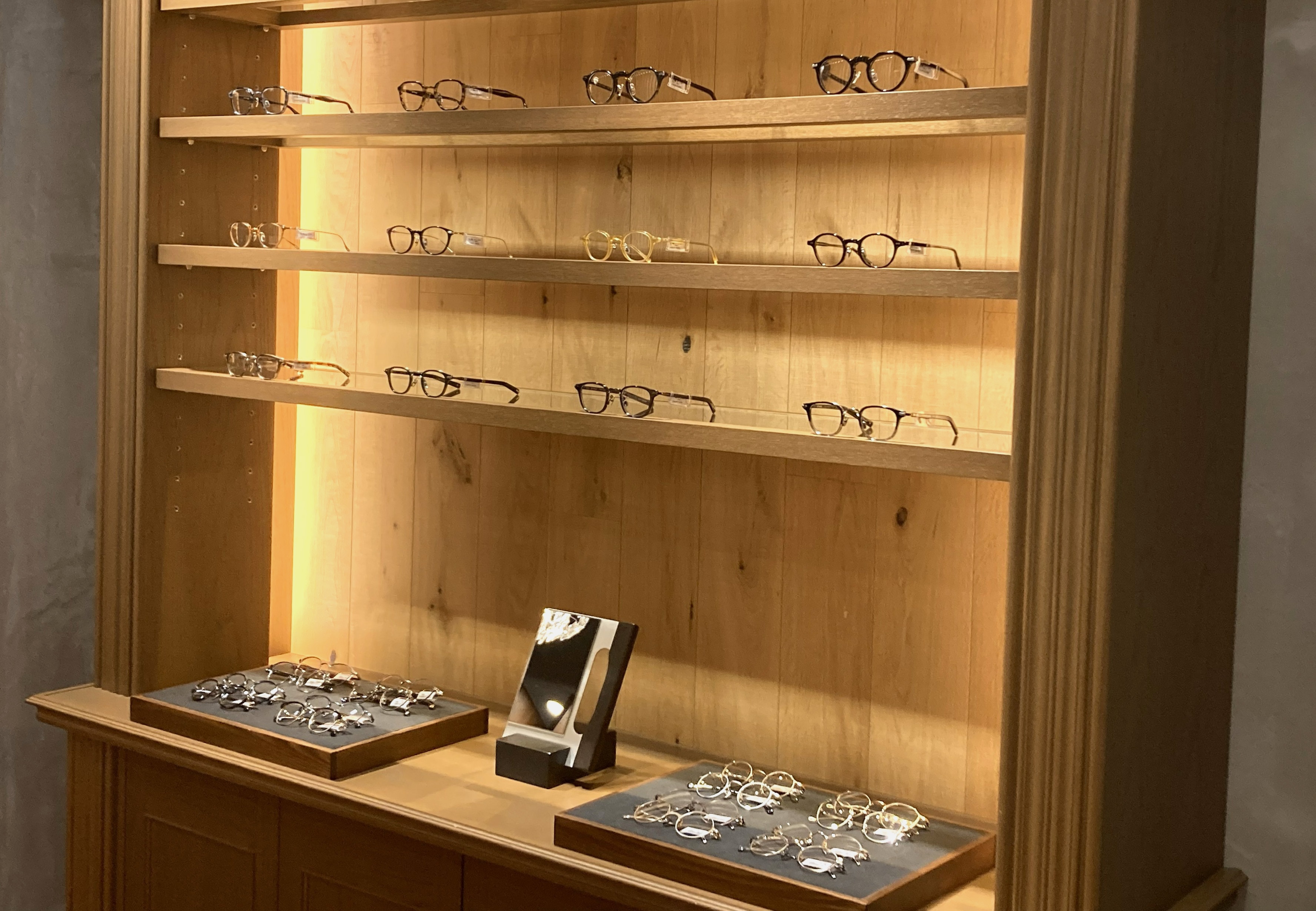
Interior of the Kaneko Optical Aoyama store
Achieving High Durability and an Attractive Finish through
Build Orientation Selection and Optimized Data Layout
Drawing on the experience and expertise it had accumulated in mass production and quality through previous 3D-printed eyewear frame projects, SOLIZE PARTNERS proposed using 3D printing for Kaneko Optical’s final products.
SOLIZE PARTNERS selected a build orientation that could achieve the durability and attractive finish required for a final product. It also optimized the data layout so that more parts could be produced efficiently in each build, enabling dozens of parts to be produced simultaneously in a single printing cycle.
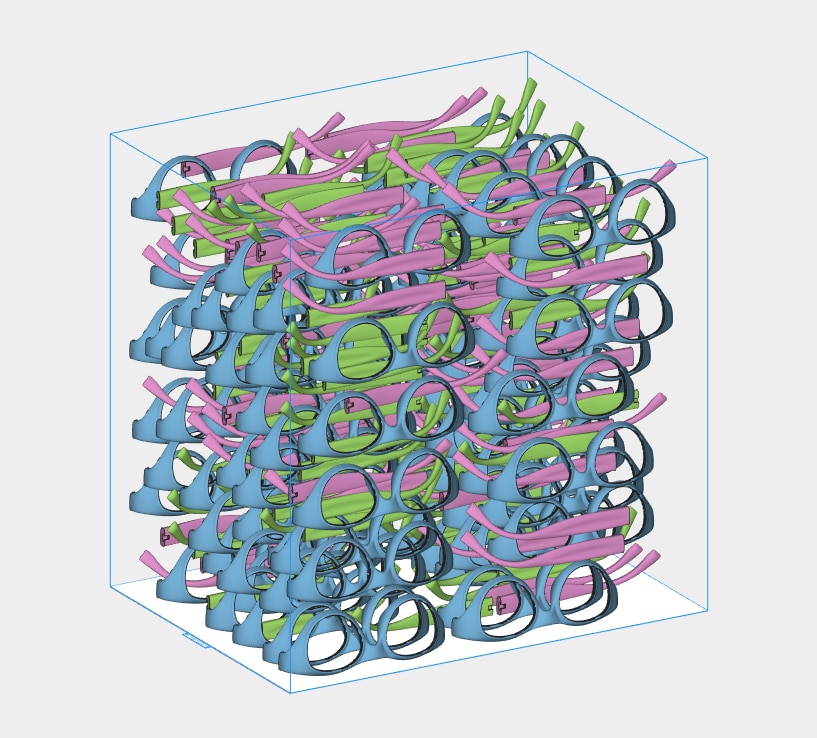
Illustration of data layout
Enabling Distinctive Designs and Complex Shapes with 3D
Printing
For these sunglass frames for a well-known eyewear brand, SOLIZE PARTNERS’ 3D printing technology made it possible to create distinctive designs and shapes that would be difficult to achieve using conventional manufacturing methods. Careful finishing down to the smallest details helped faithfully reproduce the brand’s aesthetic and design character.
PA11 was selected as the material. This plant-derived resin offers excellent strength, flexibility, and durability while also taking environmental considerations into account. Its use enabled both design and functionality to be achieved while contributing to sustainable manufacturing.
After 3D printing, only a clear surface coating was applied to preserve the distinctive texture of the 3D-printed parts.
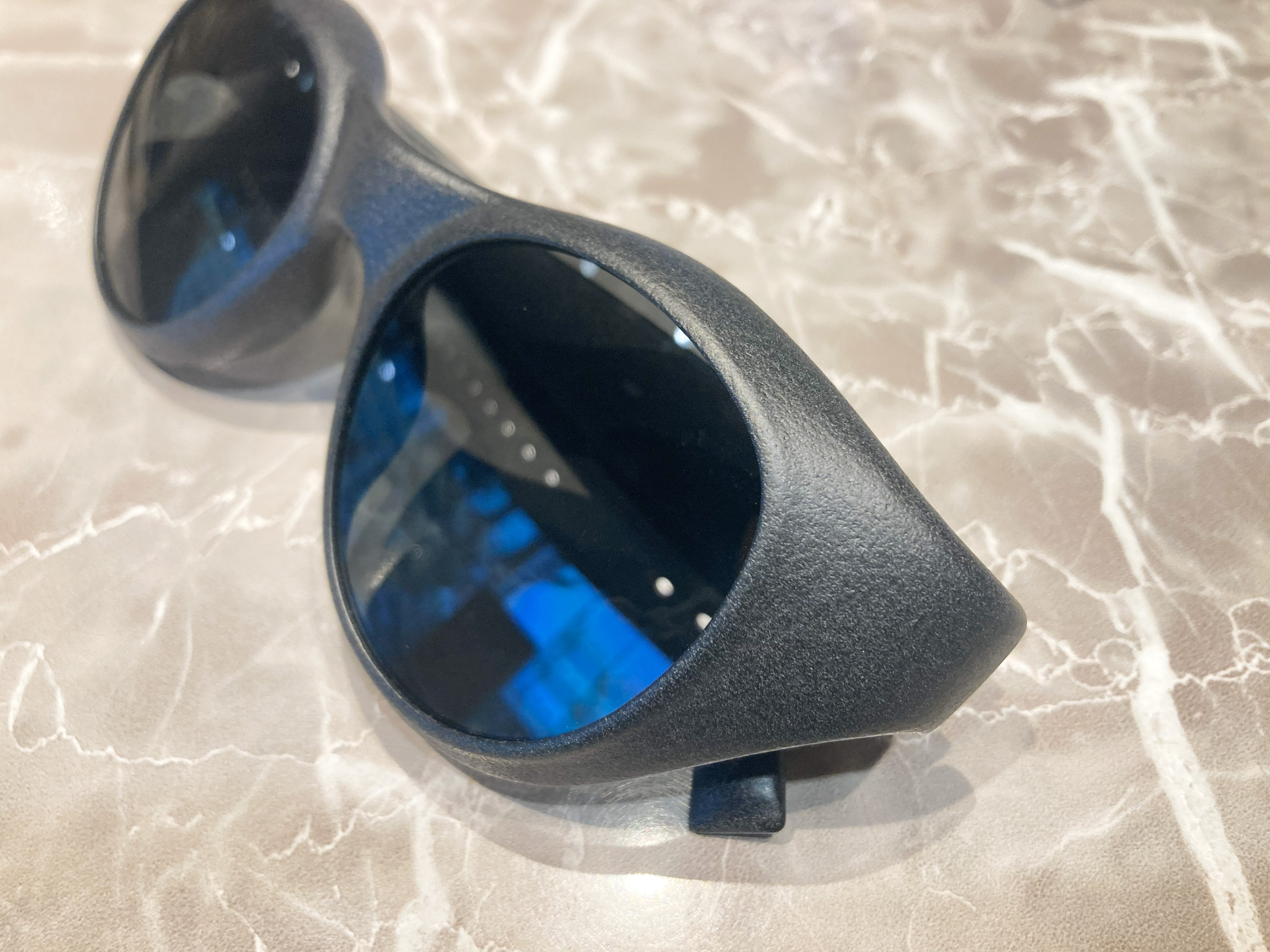
Only a clear coating was applied to the surface.
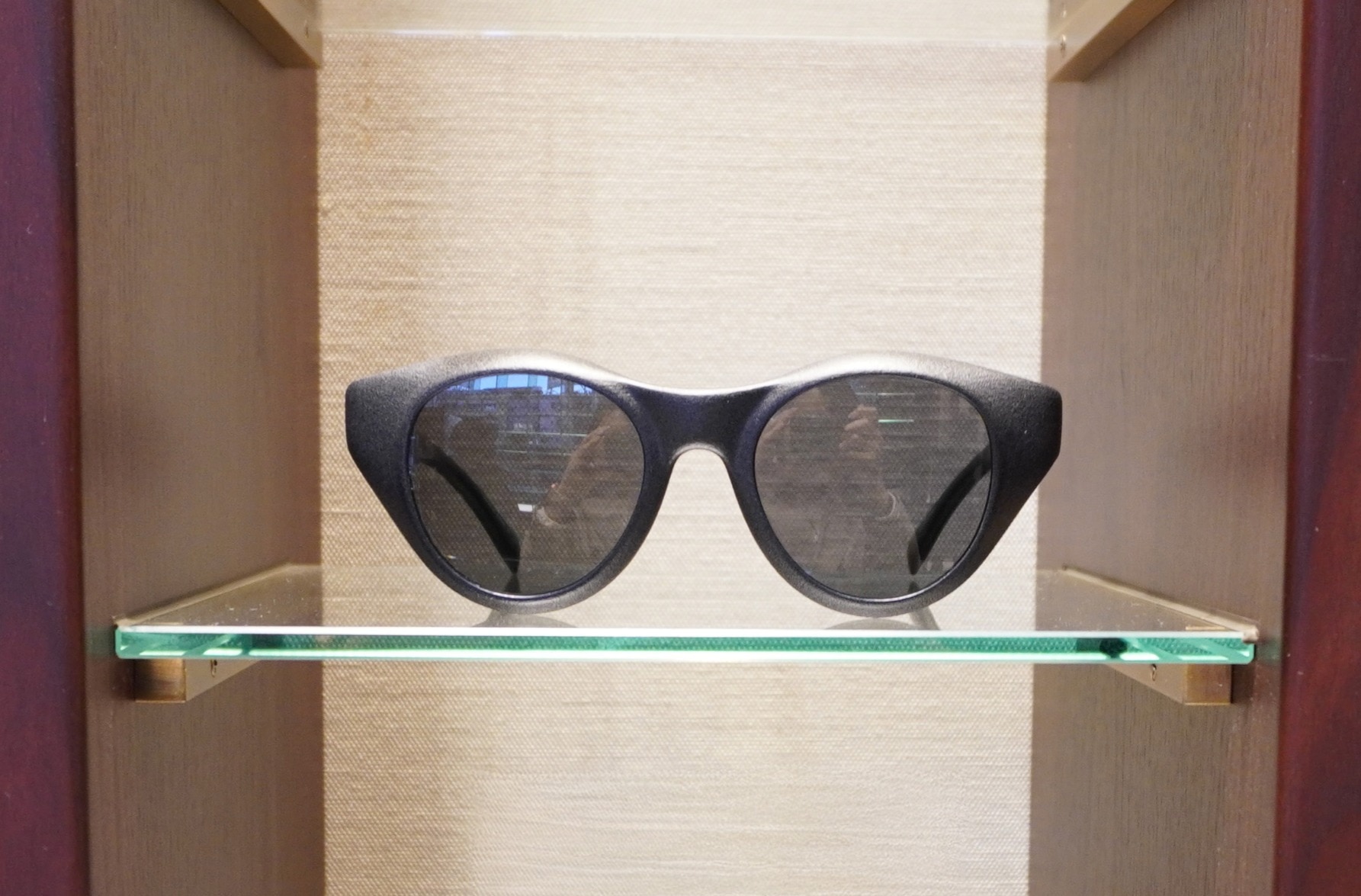
Before
-
Mold-based production required large production volumes at one time, making it difficult to pursue challenging designs.
-
Mold-based production also required consideration of manufacturing constraints such as mold-release direction, limiting design freedom.
-
Manufacturing involved significant work in subsequent processes such as cutting, bending, and polishing.
After
-
3D printing enabled small-lot production in quantities of several dozen, making it easier to pursue challenging designs.
-
With fewer manufacturing constraints such as mold-release direction to consider, greater design freedom became possible.
-
Because the required shape could be produced through 3D printing itself, the workload associated with subsequent processes was reduced.
Interview
How was your experience using a 3D printer for the first time?
After producing the prototypes, I found it very convenient to be able to revise the data immediately whenever something did not fit properly. With products such as eyeglasses and sunglasses, we need to confirm beforehand that they do not feel uncomfortable when worn. For that reason, I found 3D printing particularly easy to use because prototypes can be produced relatively easily.
When manufacturing a final product using molds, we need to produce at least around 500 units at a time, which inevitably makes it difficult to pursue challenging designs. With 3D printing, however, small-lot production is possible, making it suitable for test marketing. It also provides a high degree of freedom in terms of shape, making it easier to pursue more innovative designs. I do not think the design of these sunglasses would have been possible without 3D printing.
There are also advantages in terms of processing. Conventional resin eyeglasses require multiple steps: first cutting the shape from sheet material, followed by bending, polishing, and other processes. I felt that being able to manufacture the final product with a 3D printer without going through these complex processes was another major advantage.
What were the deciding factors in placing the order with SOLIZE PARTNERS?
We became interested in Japanese-made 3D-printed eyewear from other companies already on the market, and through our research we came across SOLIZE PARTNERS. The company had a wide range of examples involving eyeglasses and other final products, which gave us confidence in the quality, so we decided to place the order.
We saw 3D printing as an innovative technology and knew that it had been widely adopted by well-known overseas fashion brands, so we had been interested in trying it ourselves.
What did you think about the quality and finish of the 3D-printed sunglass frames?
There was very little variation from part to part, and the dimensional accuracy was high, so we had no problems at all using them as final products. Beyond the functional aspects, I also really like the distinctive texture unique to 3D-printed parts, including the visible layer lines. To make the most of that material texture, we therefore used only a clear coating for the finish.
How have customers and employees responded since the product was launched?
The sunglasses are currently available at selected stores, where they are introduced in-store using tapestries and other materials.
Customers have shown strong interest, with the refined design, light weight, and ease of wear receiving particularly positive feedback. The response has been especially strong among overseas customers.
At the same time, because the use of 3D printing is also a new initiative for our staff, some are still unsure about it. Going forward, I feel that we need to further strengthen in-store communication and information sharing.
Please tell us about your future initiatives and what you expect from SOLIZE PARTNERS.
Going forward, we are considering expanding the lineup of the sunglasses developed this time and turning them into a series.
Sunglasses have traditionally tended to feature classic, relatively flat designs. Today, however, partly because of the influence of sports fashion, streamlined and three-dimensional designs are becoming more widely accepted. I therefore feel that opportunities to use 3D printing for mass production may increase in the future.
We would also like to enhance our brand value by being recognized as a forward-looking company that uses 3D printing. Ultimately, we aim to become “the first name that comes to mind when people think of 3D-printed sunglasses.”
Our company tends to offer many conservative designs, but through development work with this brand, we are able to take on more challenging designs. We would like this work to help us reach new customer segments and increase awareness of Kaneko Optical.
We have also asked SOLIZE PARTNERS to produce another sunglasses model. Because we feel confident entrusting SOLIZE PARTNERS with the quality required for a final product, we look forward to continuing to work together.
The material used for this project was PA11. In the future, if a material becomes available that is slightly softer and has greater resilience, similar to acetate, I believe it would feel more natural against the skin and be easier to adjust. This could further expand the use of 3D printing in the eyewear field. We are also looking forward to the emergence of new materials of this kind.

© 2026 SOLIZE Corporation All Rights Reserved.