
Case Study
JAXA and SOLIZE Jointly Develop a Metal 3D-Printed Loop Heat Pipe
~The World’s First Thermal Control Device with Two Integrated Porous Structures~
Research and Development
JAXA

JAXA is a national research and development agency engaged in the research and development of domestically produced rockets, satellites, aircraft, and other aerospace technologies. JAXA and SOLIZE jointly developed a metal 3D-printed porous structure for loop heat pipes, a next-generation thermal management device used in satellites and spacecraft.
Table of Contents
- What Is a Loop Heat Pipe?
- Joint Development of a Porous Structure That Functions as a Loop Heat Pipe
- Two Characteristics Required of the Porous Structure in a Loop Heat Pipe
- Benefits of Using 3D Printing for Loop Heat Pipes
- World’s First Successful Integrated Printing of Two Different Types of Porous Structures
- Results Achieved Precisely Because of the Joint Development with SOLIZE
- Interview
What Is a Loop Heat Pipe?
Because the temperature difference between daytime and nighttime in space is extreme, controlling the temperature of precision equipment inside spacecraft is critically important. An essential element of this thermal management is the loop heat pipe, a heat transport device that plays a key role in spacecraft thermal control.
A loop heat pipe is a circulating thermal control device. It circulates a fluid, removes heat from the component being cooled through the latent heat of evaporation, and releases that heat in another location.
Figure 1 shows a schematic diagram of a loop heat pipe. The porous structure inside the evaporator, known as the wick, is the heart of the loop heat pipe. It draws up liquid using capillary force and cools the heat source through vaporization. The high-temperature vapor releases heat in the condenser and liquefies again. Through this circulation, the temperature of the component being cooled can be controlled without requiring power from a pump or similar device.
For this reason, loop heat pipes are highly effective thermal control devices for spacecraft, where resources such as mass and power are limited.
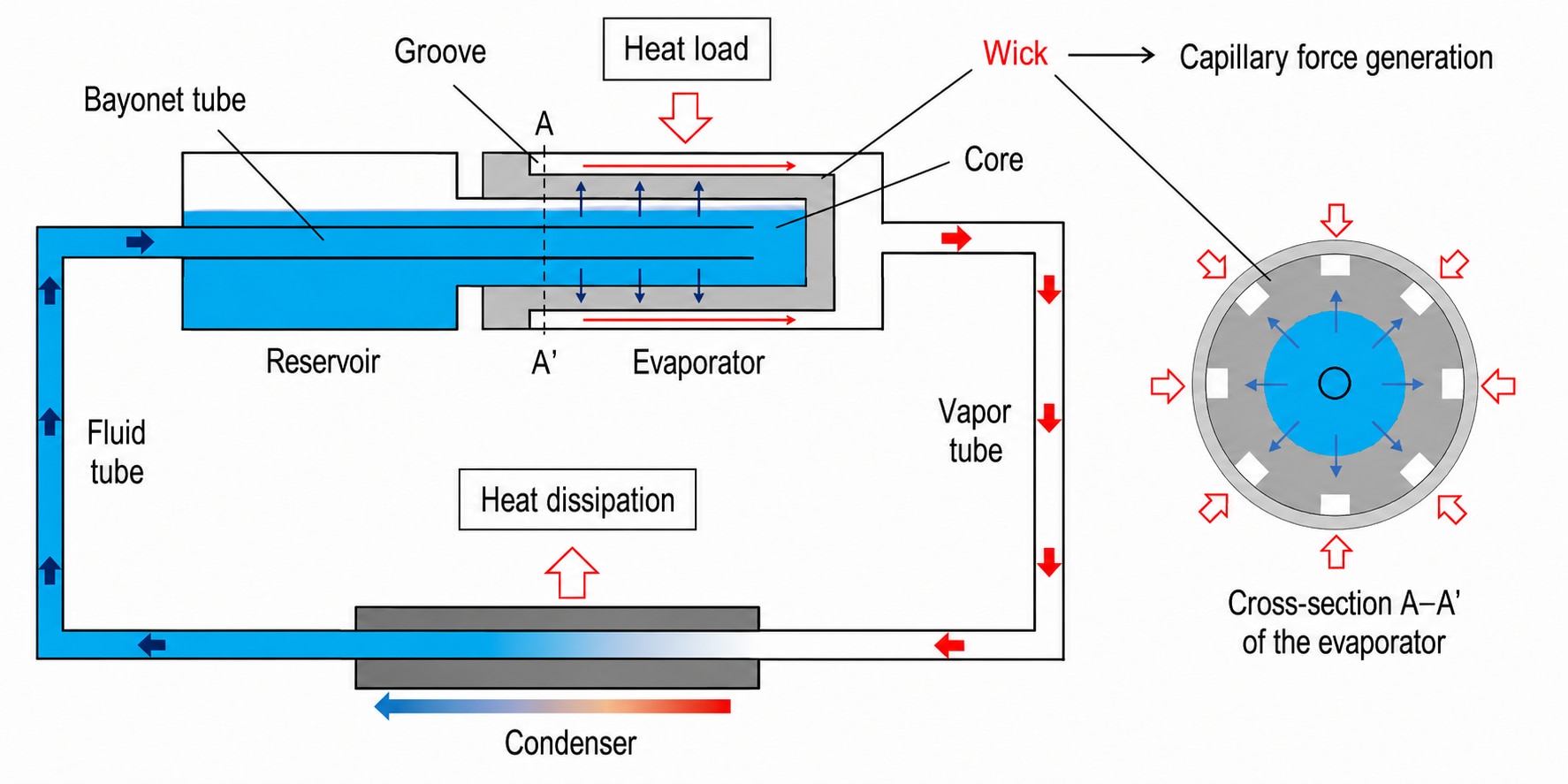
Figure 1. Schematic diagram of a loop heat pipe under gravitational conditions
Source: Proceedings of the 60th National Heat Transfer Symposium of Japan (May 2023)
Joint Development of a Porous Structure That Functions as a
Loop Heat Pipe
The porous structure used in the evaporator is essential to loop heat pipe performance. A porous structure, also called a porous body, contains many small pores, as shown in Figure 2. However, pores alone are not enough. To function in a loop heat pipe, the structure must generate sufficient capillary force while maintaining low flow resistance.
Conventional evaporators are often manufactured by sintering metal particles or fibers to form a porous structure and then shrink-fitting that structure into a separately manufactured pipe.
This process has several drawbacks. It tends to result in low yields and high costs, and many loop heat pipes for space applications are manufactured overseas. This has created a challenge for Japan in establishing mature domestic loop heat pipe technology.
To address these issues and advance Japan’s loop heat pipe capabilities, JAXA began joint development with SOLIZE, which has strengths in 3D printing technology. After approximately three years of collaboration, the team began to see the potential for a porous structure capable of replacing those used in conventionally manufactured loop heat pipes.
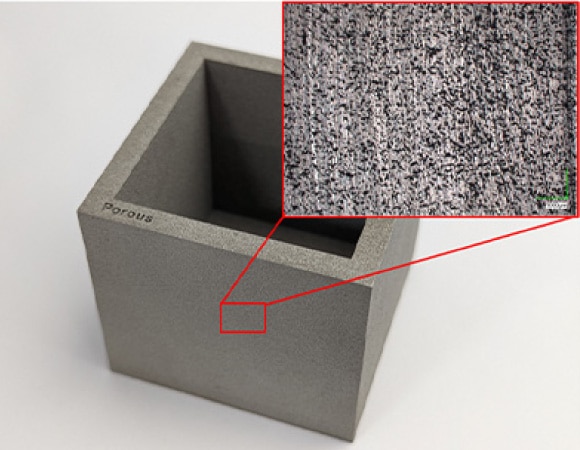
Figure 2. Porous structure sample.
Two Characteristics Required of the Porous Structure in a Loop Heat Pipe
Two properties are especially important to loop heat pipe performance. The first is pore diameter. Smaller pores increase the capillary force that draws liquid into the porous structure. The second is porosity. Higher porosity allows liquid to flow more easily through the structure.
These two properties are difficult to achieve simultaneously because they conflict from a manufacturing perspective. SOLIZE developed technology capable of controlling both properties to the level required for loop heat pipe operation.
Early in the project, JAXA evaluated the fabricated samples internally. JAXA later shared a simplified evaluation method with SOLIZE, enabling SOLIZE to conduct repeated in-house testing independently. This helped accelerate development.
Benefits of Using 3D Printing for Loop Heat Pipes
One major benefit of 3D printing is that it allows the bulk structure and porous structure to be printed as a single integrated part, as shown in Figure 3. In a loop heat pipe evaporator, the wick is normally assembled inside a bulk-structure casing.
With conventional methods, the cylindrical casing and wick are joined through shrink fitting. This can create tiny gaps between the casing and wick, potentially causing variations in the evaporator’s thermal performance. With 3D printing, the bulk and porous structures can be selectively defined in the digital design and printed as a single part, helping to resolve these issues.
Conventional methods also make it difficult to manufacture flat or complex evaporator shapes. As a result, cylindrical evaporators have been the predominant design for space-use loop heat pipes. 3D printing creates the possibility of developing high-precision evaporators in shapes that were previously difficult to manufacture.
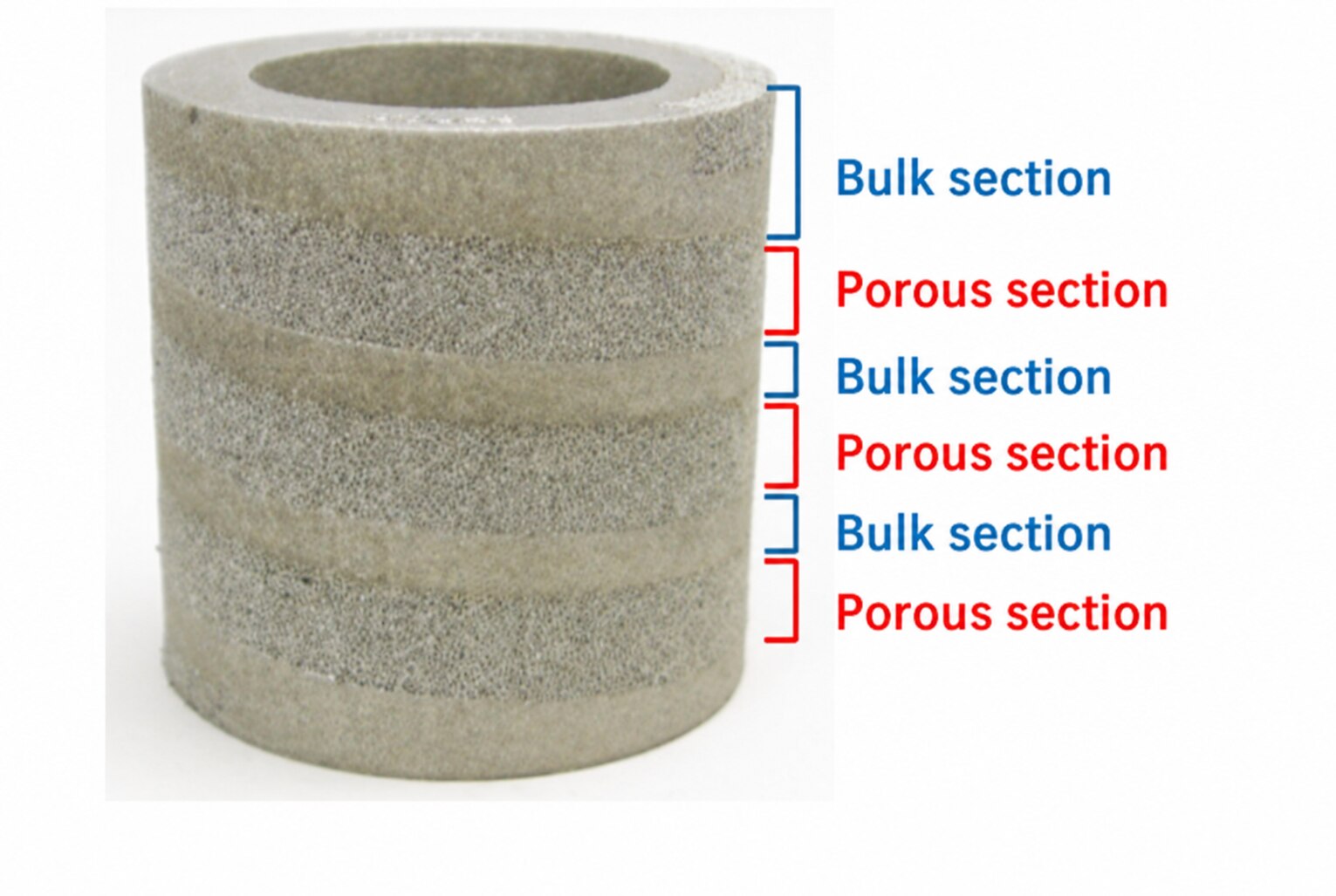
Figure 3. Sample of an integrated print combining a bulk structure and a porous structure.
World’s First Successful Integrated Printing of Two Different
Types of Porous Structures
Because loop heat pipes are used in space, they must operate in microgravity. Figure 4 shows a schematic diagram of a loop heat pipe under microgravity conditions.
In this environment, the distribution of liquid in the reservoir differs from that shown under gravitational conditions in Figure 1. Surface tension causes the fluid to adhere to the reservoir walls, so a porous structure may also be added to the reservoir to supply fluid to the evaporator.
The porous structure in the reservoir is called the secondary wick, while the porous structure in the evaporator is called the primary wick. Because the two wicks perform different roles, they require different porous properties.
SOLIZE successfully controlled the properties required for both the primary and secondary wicks and printed the evaporator and reservoir as an integrated unit. Previous research had demonstrated integrated printing of the bulk structure and primary wick in the evaporator section. However, there had been no previous example of printing the evaporator, reservoir, primary wick, and secondary wick together as an integrated unit.
This project achieved the world’s first successful operation of an evaporator-reservoir-integrated loop heat pipe that demonstrated heat transport.
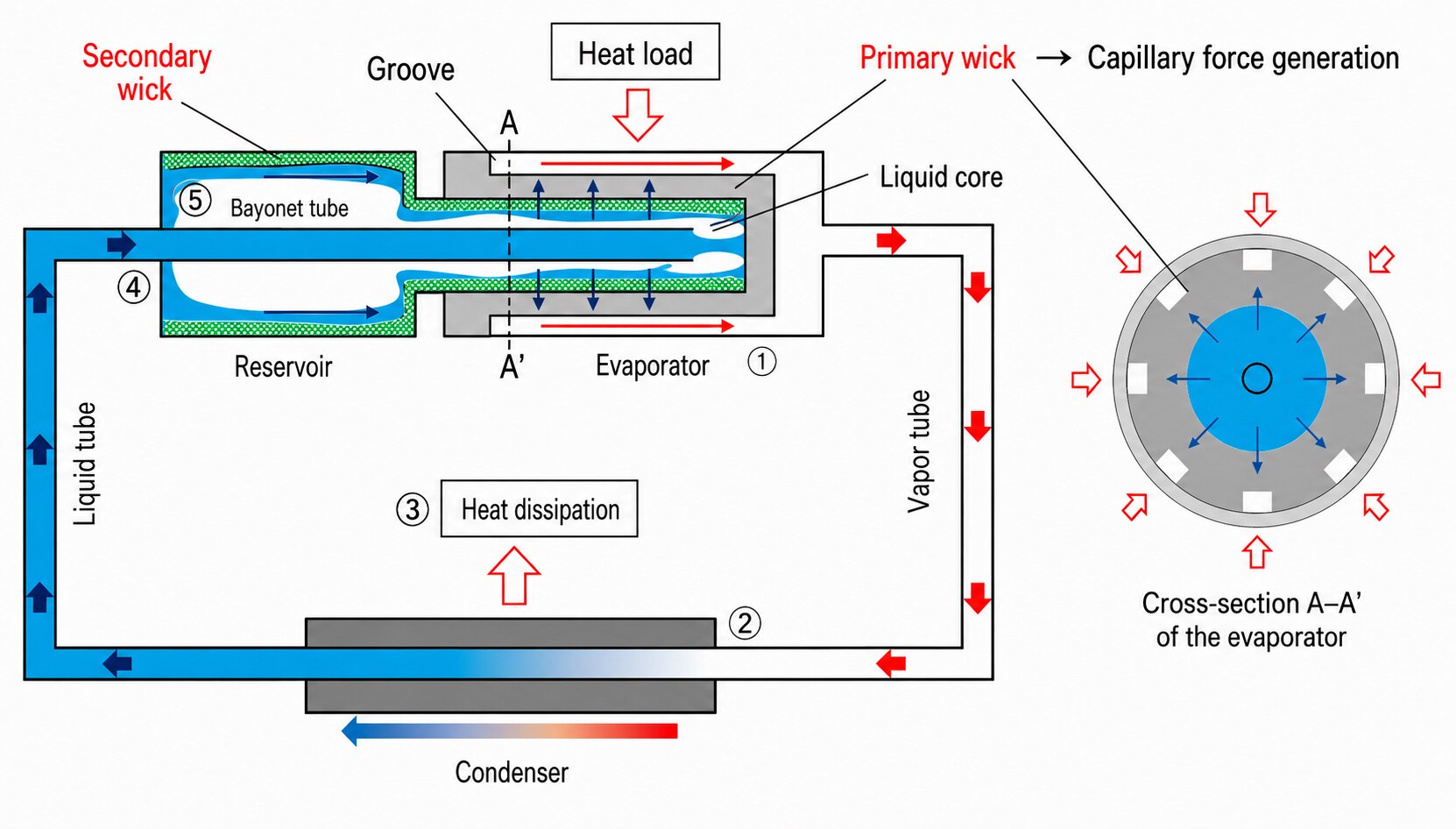
Figure 4. Schematic diagram of a loop heat pipe under microgravity conditions
Source: 68th Space Sciences and Technology Conference (November 2024)
Results Achieved Precisely Because of the Joint Development with SOLIZE
JAXA leads aerospace research and development in Japan, including research involving rockets and satellites, and employs many of the country’s leading engineers in this field. However, although JAXA could evaluate the performance required of the porous structure, it did not have extensive knowledge or experience in metal 3D printing. JAXA therefore could not simply provide specifications to a 3D printing service bureau and request fabrication.
In addition, no manufacturer in Japan had a track record of producing loop heat pipes using 3D-printed porous structures. JAXA therefore needed a partner willing to participate in joint development. Because the porous structure specifications had not yet been defined, JAXA needed to discuss the challenges and objectives with SOLIZE as development progressed. This collaborative approach led to steady progress.
The experience and results gained through this project were possible because SOLIZE works with customers from upstream stages such as basic research and development—areas that equipment manufacturers and ordinary service bureaus typically cannot support.
Interview
What led to the joint development with SOLIZE?
Yuki Akizuki:
The reason we first began working with SOLIZE was a request to manufacture a small prototype part unrelated to this project. We were considering several prototype manufacturers, and SOLIZE was one of them. The main reason we selected SOLIZE was that they were more willing than anyone else to discuss our needs in depth.
When they delivered the prototype we had requested, they asked whether there was anything else we were having difficulty with. We consulted them about whether it might be possible to manufacture a porous structure using metal additive manufacturing, and they agreed to produce a sample for us.
Until then, we had consulted several metal additive manufacturing companies, but all of them had declined, so we were very pleased. When we received the first porous structure sample and confirmed that it did, in fact, contain pores, we decided to formally begin joint research.
What made you decide to try manufacturing a loop heat pipe with a metal 3D printer?
Yuki Akizuki:
I had been researching loop heat pipes since my university days. A loop heat pipe is an extremely effective thermal control device that enables thermal management while remaining lightweight and requiring no electrical power. I believed that putting this technology into practical use could lead to a major technological breakthrough, so I continued my research.
However, only a limited number of manufacturers were capable of producing the porous structure essential to a loop heat pipe, processing it into the shape of a wick, and completing it as an evaporator. The costs and lead times were also very high. I felt that this was a major barrier to expanding the applications of loop heat pipes.
Conversely, I was convinced that if loop heat pipes could be produced at lower cost, with fewer resources, and in shorter lead times, it would represent a breakthrough that would expand their range of applications. I thought that metal 3D printing might be well suited to manufacturing loop heat pipe evaporators at low cost and with stable quality.
How has the joint research with SOLIZE been?
Yuki Akizuki:
During the first year, we were not able to achieve results easily. In particular, we struggled with issues such as vapor leaking from the joint between the porous structure and the bulk structure, as well as only the surface of the porous structure becoming highly dense.
Even when the liquid could be drawn up, the vaporized fluid became trapped inside the porous structure, preventing continuous operation. As a result, it took a long time to reach the point at which the device could function as a loop heat pipe.
Even so, SOLIZE patiently continued working with us on the research. Toward the end of the second year, we finally succeeded in producing an evaporator that operated as a loop heat pipe.
However, there are still many challenges to overcome before practical application. Each time we resolve one challenge, another emerges. Whenever this happens, we share the issues and requirements with SOLIZE, ask them to propose new ideas, conduct trials, and continue overcoming the challenges one by one.
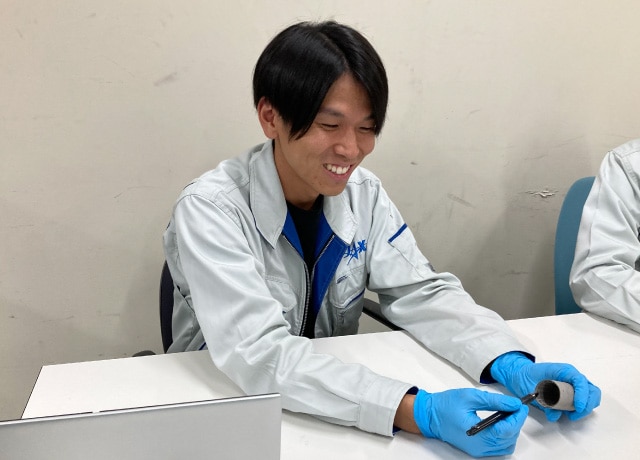
Yuki Akizuki
Research and Development Engineer
Japan Aerospace Exploration Agency (JAXA)
Research and Development Directorate
Research Unit II
Kimihide Odagiri:
My research has focused on thermal and fluid control, so I understand what kinds of porous structures can improve loop heat pipe performance and which characteristics are desirable.
On the other hand, I do not have specialized expertise in 3D printing, so I do not know the extent to which particular characteristics or structures can be reproduced using a 3D printer.
SOLIZE understood and shared our objectives for the types of structures and performance we wanted to achieve, and they also proposed many ideas. I believe the project must have been extremely challenging for SOLIZE, but we are where we are today precisely because they did not give up when results were not immediate and instead continued working with us.
However, there are still many areas in which we continue to face difficulties. One is that, compared with sintered porous bodies manufactured using conventional methods, the pore diameter and porosity of the 3D-printed porous structure remain inferior in certain respects.
Over the past three years, SOLIZE has extensively investigated fabrication conditions, including parameter adjustments. However, because the number of parameters is extremely large, I believe this has also required considerable effort from SOLIZE. Thanks to their work, after three years we are finally beginning to identify correlations.
As we move toward practical application, we are careful not to allow the work to become research for its own sake. We remain focused on the original objective: making it possible to produce loop heat pipes at low cost and with fewer resources.
Our goal is to complete a loop heat pipe that can be applied across a wide range of fields.
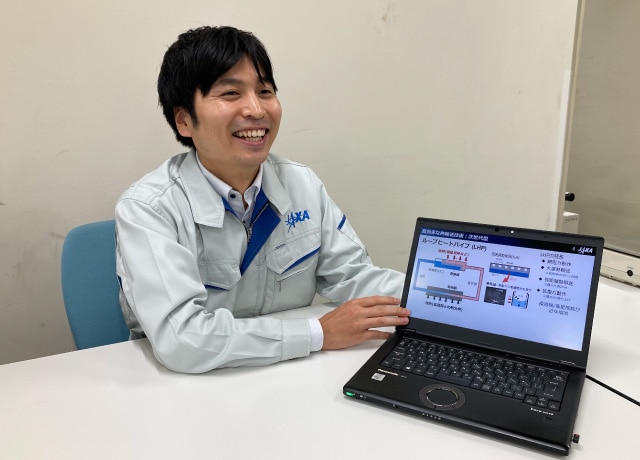
Kimihide Odagiri
Specially Appointed Assistant Professor, Ph.D. in Engineering
Japan Aerospace Exploration Agency (JAXA)
Institute of Space and Astronautical Science
Department of Space Flight Systems
What is your future outlook for metal 3D-printed loop heat pipes?
Yuki Akizuki:
Loop heat pipes, which use capillary force as their driving source, are thermal control devices with exceptional value for spacecraft because they are lightweight and require no electrical power.
As spacecraft are equipped with increasing numbers of precision instruments, the importance of thermal management will continue to grow. We want to make metal 3D-printed loop heat pipes the standard thermal control device for spacecraft, and we intend to continue advancing our research and development so that this can be realized as soon as possible.
Ultimately, we aim to establish a system in which loop heat pipes can be designed, manufactured, and tested domestically, with the goal of achieving domestic loop heat pipe production in Japan.
Kimihide Odagiri:
With existing manufacturing methods, cylindrical shapes are predominant. From the perspective of mounting the device onto equipment, this means that thermal resistance must be introduced at least once.
For example, when controlling the heat generated by a CPU, the CPU is flat. To attach a cylindrical loop heat pipe, a base known as a saddle must therefore be installed. That saddle becomes a source of thermal resistance, reducing thermal efficiency.
By replacing the existing manufacturing method with metal 3D printing, it becomes possible to manufacture not only cylindrical shapes but also flat-plate shapes more easily. This allows the device to be installed directly onto the equipment, thereby improving thermal efficiency.
The ability to control heat expands the possibilities for further developing and improving product performance that had previously been limited or abandoned because of temperature constraints caused by thermal loads.
This is not limited to space applications. The technology can be applied to automobiles, industrial equipment, home appliances, and many other fields.
I hope that, in the near future, these metal 3D-printed loop heat pipes will become thermal control devices used not only in space but across a wide range of applications.
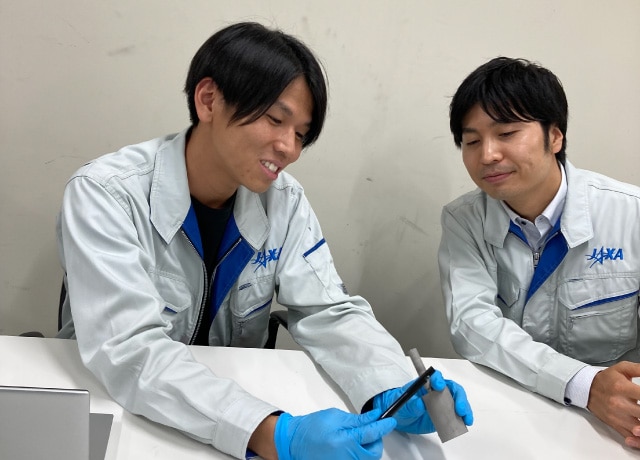
※Departments and titles are those held at the time this initiative was carried out.

© 2026 SOLIZE Corporation All Rights Reserved.